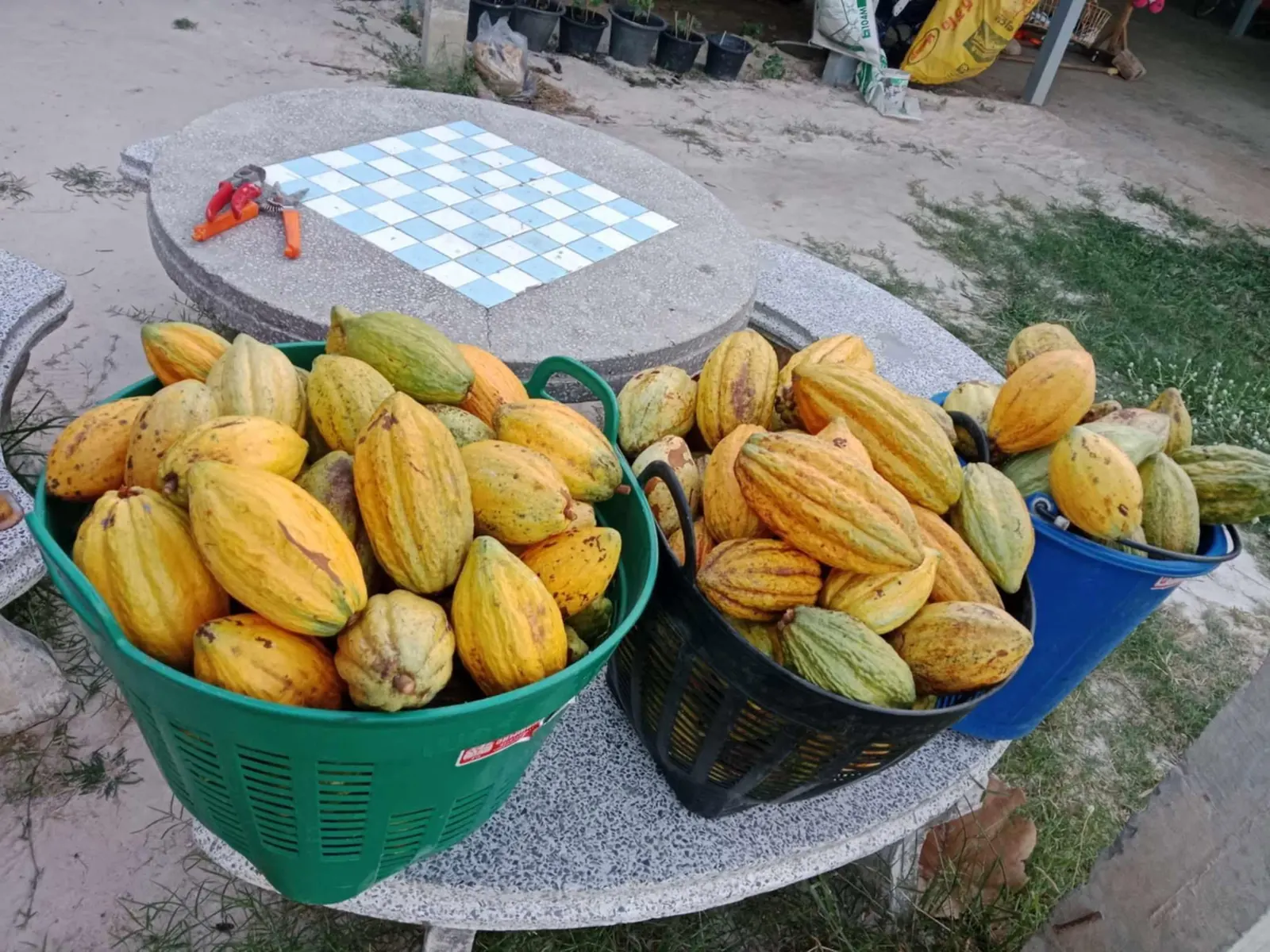
A dried pod sold for 800 baht. The farmer got 50 a kilo.
Dragon King Chocolate started as an uncomfortable arithmetic problem in a family export business. Twenty years later it is around 50 farms, one facility in Chiang Mai, and chocolate that is Thai from soil to jar.

We sold dried flowers abroad. One line was cacao pods.
The family business exported dried flowers and decorative plants. Dried cacao pods were one product among many, and they did well: a single pod sold overseas for around 800 baht as an ornament.
Buying those pods meant standing in Thai cacao farms and hearing what the farmers were paid for their actual crop. Raw beans fetched 50 to 120 baht per kilogram. A whole kilogram of the thing that makes chocolate, for less than a sixth of what one hollow pod earned as decor.
We changed the question.
The obvious question was "how much can cacao be sold for". It leads to trading, to buying low and selling high, to the same gap that was already there.
The question the family chose instead was "how can the people at the beginning of the supply chain keep making a living from growing cacao". That question has one honest answer: someone has to buy the harvest, every year, at a price worth planting for. So that is what Dragon King Chocolate became.

Around 50 farms, north, northeast and east.
Plus cacao-growing communities across the border in Laos and Myanmar. Each one gets seedlings, cultivation and fermentation knowledge, farm visits, and the thing that matters most: a guaranteed buyer for what they grow.
Not a contract to sign. A crop that pays.
- Seedlings. Trinitario hybrid saplings from our own nursery, so every farm starts with the same genetics we make chocolate from.
- Knowledge. How to plant, shade, prune and irrigate, and then the harder part: how to ferment and dry beans so they are worth roasting.
- Visits. We go to the farms. Soil and pH are tested in the field, not assumed.
- A market. We buy the harvest. That is the whole point, and it is the one thing a farmer cannot arrange alone.
The result: 100% of the cacao in every Dragon King product is grown in Thailand. Not blended, not topped up with imports in a lean year.
Join as a farm
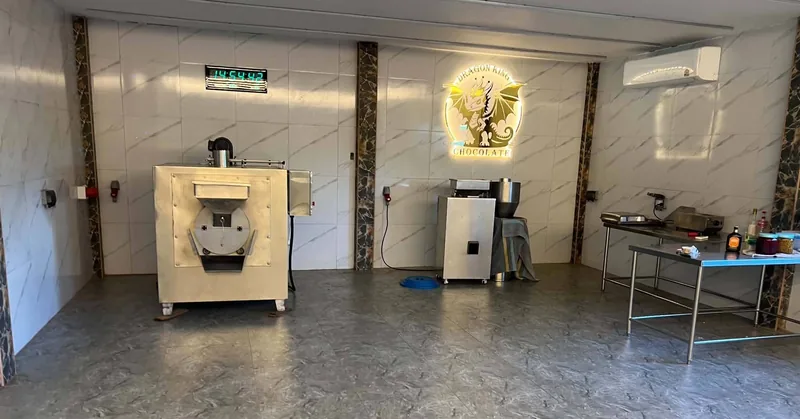
Dried beans come in. Chocolate goes out.
Once dried beans arrive at the Chiang Mai facility, every remaining step is ours: roasting, shell removal, grinding, chocolate-making, tempering, molding and filling. There is no outside couverture in the chain and no step we cannot show you.
Training sessions at the factory can be arranged for anyone growing their own trees, and visits are by appointment.
- 1
Roasting
Small batches, profile set per farm lot.
- 2
Shell removal
Winnowed to nibs.
- 3
Grinding
Nibs to cocoa mass.
- 4
Chocolate-making
To 85%. Cacao and sugar.
- 5
Tempering
Snap and shine.
- 6
Molding
Fluted shells, tray by tray.
- 7
Filling
Fruit, nut, liqueur.

The bean stays in charge.
The signature line is built on 85% dark chocolate on purpose. At that level the natural intensity and character of the cacao is the main event, and the origin is something you can actually taste rather than read on a label.
Intensity on its own gets monotonous. So each praline carries a fruit or nut filling: mango jelly, apricot, fig, cranberry, hazelnut krokant, cherries in cherry liqueur and more. The fillings change the conversation. The shell never does.
See the range
"Not enough people know Dragon King Chocolate yet." The founding family, Chiang Mai
Twenty years in, that is the challenge the founders name first. Not the farms, not the chocolate. Awareness. If you have read this far, you are part of the fix. Tell someone.